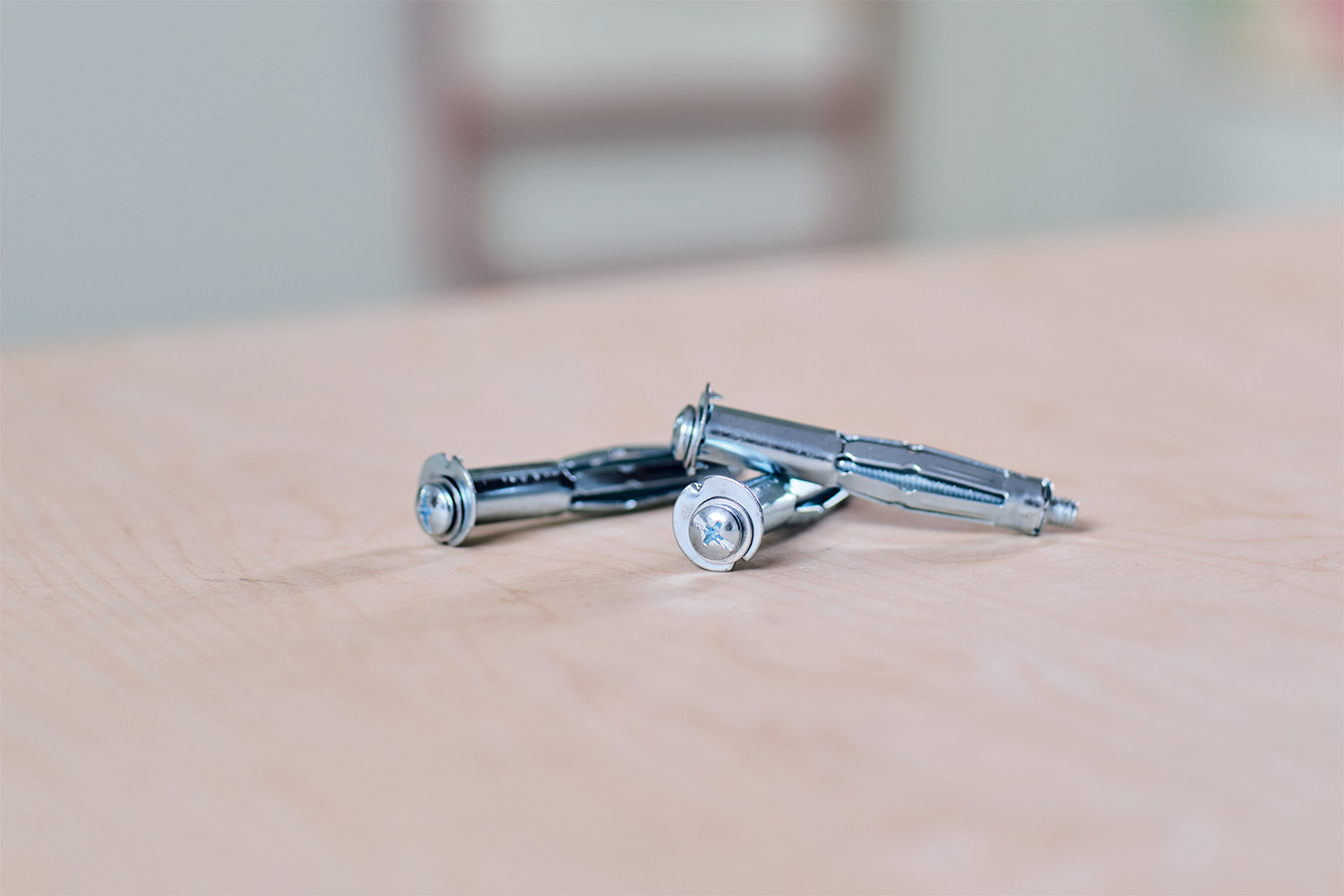
Quick Answer: What are hollow wall anchors used for?
Hollow wall anchors expand behind plasterboard to create a secure fixing point. This allows you to mount heavier objects like shelves, mirrors, cabinets and TVs without needing to hit a wall stud.
- Designed for plasterboard and hollow walls
- Expand behind the wall for strong grip
- Suitable for medium to heavy loads
- Ideal for shelves, mirrors and wall-mounted items
- Work in plasterboard and chipboard walls
How do hollow wall anchors work?
When a hollow wall anchor is installed into plasterboard, the body of the anchor expands behind the wall as the screw is tightened. This creates a clamping effect that distributes the load over a larger surface area.
This expansion is what allows hollow wall anchors to hold significantly more weight than a standard screw. Once installed correctly, the fixing becomes securely locked behind the plasterboard.
With properly installed anchors, plasterboard can support surprisingly heavy loads. One square metre of plasterboard with a single wallboard can support approximately 15 kg. Double plasterboard can support around 25 kg per square metre, while triple wallboard can hold up to 35 kg.
If you're going to put up something heavier, read our guide on this.
How to use hollow wall anchors step by step
Installing hollow wall anchors is straightforward when you follow the correct steps. Proper installation ensures maximum holding strength and prevents damage to the plasterboard.
- Choose the correct type of plasterboard fixing for your application
- Drill a hole matching the anchor diameter
- Remove the screw from the hollow wall anchor
- Insert the anchor into the drilled hole
- Gently tap until the anchor sits flush with the wall
- Reinsert the screw partially
- Use a setting tool to expand the anchor behind the wall
- Remove the screw and mount your object
Detailed installation guide
1. Choose the right plasterboard fixing
Start by finding out which type of plasterboard fixing you need. Read our guide on choosing the right plasterboard fixings for tips based on what you want to fasten.
2. Drill the correct hole size
Drill a hole sized for the anchor you are using. With hollow wall anchors from Rapid, the correct drill size is included in most packs. Note that this may not apply to larger Master packs.
3. Remove the screw
Each hollow wall anchor comes with a pre-installed screw. Unscrew and remove it before inserting the anchor into the wall.
4. Insert the hollow wall anchor
Push the anchor into the drilled hole. Gently hammer the last section so the anchor teeth grip into the plasterboard surface.
5. Reinsert the screw
Screw it back in, but leave a gap between the screw head and the anchor. This space is required for the setting tool.
6. Expand the anchor using the setting tool
Insert the setting tool into the gap and ensure it sits at the correct angle. Squeeze the handles together until you feel resistance. This resistance indicates the anchor is expanding behind the wall.
If you don’t feel resistance, screw the screw in slightly further and repeat the process.
7. Mount your object
Once expanded, remove the screw, position your item, and tighten the screw again to secure it to the wall.
When should you use hollow wall anchors?
- Mounting shelves on plasterboard
- Installing mirrors
- Hanging cabinets
- Fixing curtain rails
- Mounting TVs (lighter models)
- Installing wall storage
More tips and guides
For more tips, read our other guides on plasterboard fixings here.